Overview
Holiday at Lago d'Iseo: the relaxed travel guide
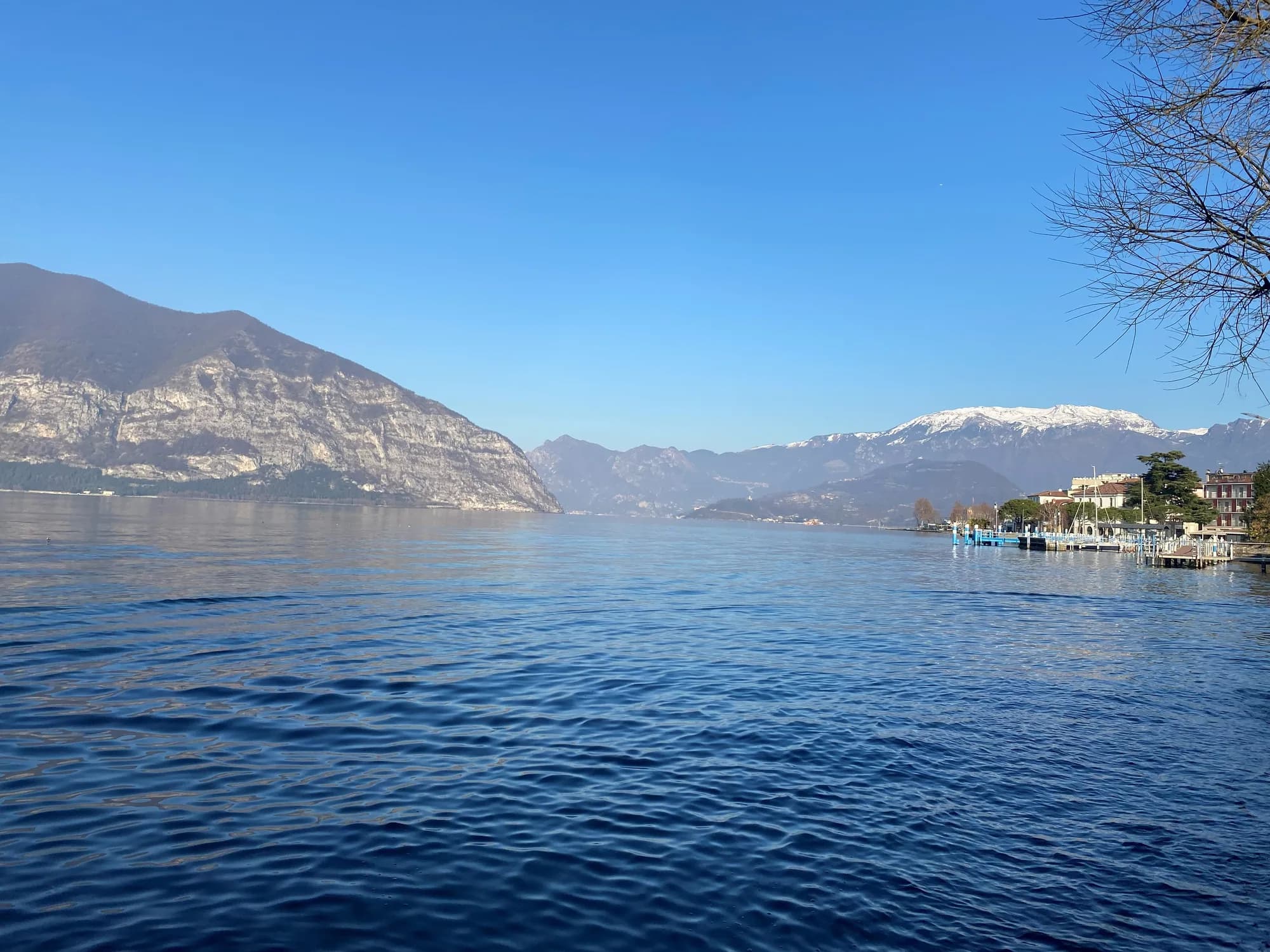
Lago d'Iseo (in English often called 'Lake Iseo') is an emerald-green mountain lake in Lombardy: it stretches from its southern tip at Sarnico on the border with the province of Bergamo to its northern end at Pisogne. Along its shores lie picturesque villages, the vineyards of Franciacorta and rugged Ice Age cliffs; in the middle sits the largest inhabited inland island in Europe: Monte Isola.
The lake gained worldwide fame in 2016 through Christo's art installation 'The Floating Piers', which briefly thrust Iseo into the spotlight. Today it is a rewarding destination year-round: days on the water, hiking and cycling, wineries in Franciacorta, the art cities of Bergamo and Brescia, and atmospheric Christmas markets during Advent. This guide covers the essentials; the detailed articles go further in depth.
What makes Lago d'Iseo special
The lake is considerably smaller and quieter than Lake Garda or Lake Como, and that is precisely its appeal: less hustle, shorter distances, more everyday Italian life. In the centre lies Monte Isola (approx. 4.5 km², car-free, eleven villages), surrounded by two tiny private islands, Loreto and San Paolo.
The southern shore around Iseo, Clusane and Sarnico is flatter, with promenades, lawns and the Torbiere del Sebino nature reserve. The northern shore towards Lovere and Pisogne becomes more alpine: narrow roads, cliff faces, small coves. The lake is also famous for its fish cuisine (tinca/tench, coregone/whitefish) and the air-dried salami of Monte Isola.
Best time to visit
May, June and September are considered the most pleasant months: mild weather, the lake is already or still warm enough, and the villages are not overcrowded. July and August bring swimming weather, lively promenades and festivals (such as the Seaside Festival and open-air cinema in Sulzano), but also more activity.
Winter is also worthwhile: in Iseo every Advent weekend features the 'Natale con Gusto' market, Lovere and Sarnico glow as 'Villages of Light', and on Monte Isola lantern processions wind through the mountain villages. In January/February the wine season in Franciacorta gets under way. Some boat lines run a reduced schedule in winter: check the Navigazione Lago d'Iseo timetable in advance.
The villages on the lake, briefly explained
Iseo, the 'Capital of the Lake': lively, with medieval lanes, boutiques, restaurants and large weekly markets on Tuesdays and Fridays (the Lake Iseo fresh fish market on Fridays 8 am–1 pm is considered the largest in the region). Clusane di Iseo: old fishing village south of Iseo with the 14th-century Castello Carmagnola on a promontory, host to the 'Festa della Tinca' in July. Sulzano: opposite Monte Isola, the main ferry port to the island, with the viewpoint hill Colle di Santa Maria del Giogo (approx. 1,000 m). Lovere on the northern shore is one of the 'Borghi più belli d'Italia'; Pisogne is known for its Romanino frescoes.
Our accommodation Little Mier is in Via Mier in the heart of Iseo: central, quiet, with a private garden and its own parking space in the courtyard. From here you can quickly reach the harbour, the old town, Franciacorta and Bergamo airport.
| Place | Location | Known for |
|---|---|---|
| Iseo | Southern shore | Capitale del Lago, markets, harbour, old town |
| Clusane di Iseo | Southern shore | Fishing village, tinca cuisine, Castello Carmagnola |
| Sarnico | South-west shore | Art Deco villas, lake promenade |
| Sulzano | Eastern shore | Ferry port to Monte Isola, Colle climb |
| Monte Isola | Middle of the lake | Car-free, salami, Madonna della Ceriola |
| Lovere | Northern shore | 'Borghi più belli d'Italia', Tadini gallery |
| Pisogne | Northern shore | Romanino frescoes, cliffs |
Getting there: car, train and plane
By car: Motorway A4 Milano-Venice, exit Palazzolo sul Oglio or Rovato, brings you to Iseo in around ten minutes. Coming from Bergamo, take the SS42 via Sarnico. Car park at the harbour (Via per Rovato) or the pay-and-display on Via Alzano.
By train: from Brescia the regional train RE3 (Brescia-Edolo, Trenord) runs hourly to Iseo, journey around 30 minutes, ticket around €3–4. From Milan always with a change in Brescia. Bergamo Airport (BGY) is around 40 kilometres from Iseo: around 40–50 minutes by car, the most convenient arrival point.
Without your own car: new for summer, the seasonal Iseo Express (Arriva) runs daily from 12 June to 13 September directly from Bergamo Airport to Iseo with no changes (just over an hour). See the arrival guide for details.
How many days do you need?
Three days are the minimum: one day each for Monte Isola (ferry, walk, lunch), Iseo old town and market, and a Franciacorta trip to a winery. In five days you can add hiking, swimming, Lovere or Sarnico.
A week allows time for Bergamo (Città Alta, 40 minutes by car, UNESCO World Heritage) or Brescia (30 minutes, Roman ruins and Pinacoteca Tosio Martinengo), a cycling tour of the lake and real rest. Families benefit from a fixed base in Iseo: short distances, no daily repacking.
Costs & budget
Lago d'Iseo is more moderate than Lake Garda or Lake Como. Reference prices: ferry Sulzano-Monte Isola €2.60 one-way (+ €1.50 landing fee since 2025), Iseo market free, admission Sassabanek-Lido €4–8, Franciacorta cellar tour with tasting €15–30 per person.
Food: a lunch menu (Pranzo di Lavoro, Mon–Fri) costs around €12–15 including water. Dinner with starter, pasta and main course ranges between €25 and €50 per person depending on the restaurant.
Day trips from Iseo
Bergamo Upper Town (Città Alta): one of the most beautiful medieval city districts in Italy, UNESCO World Heritage since 2017. Take the cable car up, stroll through arcades and along the city wall: half a day is enough, a full day is better. By train from Iseo via Brescia in around 60–70 minutes.
Brescia: Santa Giulia monastery with city museum, Capitoline Temple and Pinacoteca Tosio Martinengo, by train from Iseo in around 30 minutes. Sarnico on the southern shore has Art Deco villas and a lovely lake promenade; Clusane is famous for its baked freshwater fish and polenta.
3 days at Lago d'Iseo: a suggestion
Day 1, Iseo: explore the old town, Piazza Garibaldi and the harbour, the weekly market (Tue/Fri), aperitivo on the Lungolago. In the afternoon a lake cruise or the Torbiere del Sebino by bike.
Day 2, Monte Isola: ferry from Sulzano (10 min from Iseo), the shore promenade, the climb to Madonna della Ceriola, lunch of lake fish and salami. Back to Iseo in the evening.
Day 3, Franciacorta: in the morning a winery with a cellar tour and tasting (book ahead), lunch among the vines. If you like, add a detour to Bergamo (Città Alta) or Lovere.
More time? With 5–7 days you can add swimming, hiking (Colle di Santa Maria del Giogo), the northern shore (Lovere, Pisogne) and a day in Brescia or Bergamo.
Frequently asked questions
- Is Lago d'Iseo worth it compared to Lake Garda or Lake Como?
- If you prefer something quieter and more authentic: yes. Lake Iseo is less developed for tourism, prices are more moderate, and with Monte Isola, Franciacorta and places like Lovere it has highlights that exist nowhere else. For a vibrant nightlife or wide sandy beaches, the neighbouring lakes are better equipped.
- Do you need a car at Lake Iseo?
- Iseo itself and Monte Isola are easy to explore on foot, by boat and by bicycle. For Franciacorta, the Outlet Village, Bergamo, Brescia or the northern shore a car (or a rental car from Bergamo) is significantly more practical.
- What were 'The Floating Piers'?
- A walkable floating pier installation by artist Christo in 2016, connecting Sulzano, Monte Isola and the island of San Paolo across the water. It was only on view for a few weeks, but continues to shape the image of the lake to this day: a sign along the promenade in Sulzano commemorates it.
- How long should you holiday at Lago d'Iseo?
- Three days are the minimum for the highlights. With five to seven days there is time for hiking, swimming, Bergamo and real deceleration. Those who stay longer discover the quiet evening hours in Iseo when the day-trippers have gone.
- Which town at Lake Iseo works best as a base?
- Iseo is the best starting point: station in the town centre, harbour with ferries to Monte Isola, markets on Tuesdays and Fridays, short distances to Franciacorta. Sulzano offers a direct ferry connection and is quieter; Sarnico is well placed for the southern shore.
- When is the best time to visit Lago d'Iseo?
- The most pleasant months are May, June and September: mild weather, the lake is warm enough and the villages are not overcrowded. July and August bring swimming weather and festivals, but more activity. Advent is also worthwhile, with Christmas markets in Iseo, Lovere and Sarnico.
- How do I reach Lago d'Iseo without my own car?
- By train from Brescia on the regional RE3 (Brescia–Edolo) hourly to Iseo (about 30 minutes). In summer the seasonal Iseo Express (Arriva) also runs from Bergamo Airport to Iseo with no change. On site you manage well with ferry, bus and rental bike; only for Franciacorta, the outlet and the northern shore is a car more practical.
- How much does a holiday at Lago d'Iseo cost?
- Lake Iseo is cheaper than Lake Garda or Lake Como. Reference prices: ferry Sulzano–Monte Isola €2.60 one-way (plus €1.50 landing fee), a lunch menu (Pranzo di Lavoro) around €12–15, dinner €25–50 per person, a Franciacorta cellar tour with tasting €15–30. Markets and promenades cost nothing.
Comments & Questions
Have an update, a local experience or a question about this guide? Add a short note.
No comments yet. The first practical note is often the most helpful.